精读笔记
Problem Setting
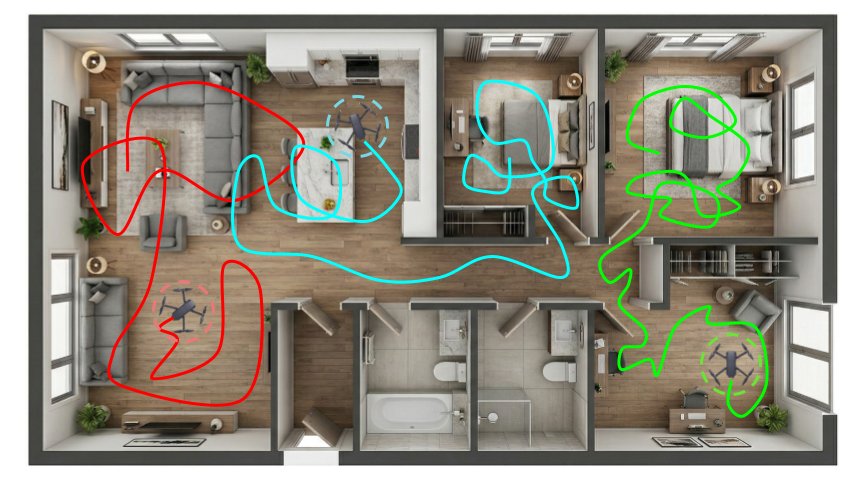
COLMAR 关注的是多 agent active 3D reconstruction 中的 cooperative view allocation,而不是单纯的 next-best-view selection。真正问题是:在固定步数和相同传感预算下,多个机器人怎样把有限观察分配到互补区域,而不是把预算浪费在重复视角、局部徘徊或空间扎堆上。
困难点在 credit assignment。单个 agent 看见新表面是正收益,但如果多个 agent 同时看见同一块区域,team-level 边际收益会急剧下降。传统 NBV/frontier 方法通常把 utility 定义在单个候选视角上,然后再做简单分配;学习式单 agent policy 被复制到多 agent 后,也缺少“别人已经覆盖了什么”的行为约束。因此关键矛盾是 individual information gain 与 team-level non-redundant coverage 之间的不一致。
Motivation
已有路线不够的地方不是没有更强 backbone,而是 reward 和 state abstraction 没有对齐 reconstruction 的团队目标。frontier/NBV 的局部 utility 在复杂 indoor geometry 下容易 myopic;learning-based active reconstruction 虽然能学习探索策略,但如果主要依赖最终 reconstruction score 或粗粒度 reward,策略很难知道中间哪一步减少了冗余、哪一步只是移动但没有贡献。
作者的核心观察是:mapping backend 在在线更新过程中天然产生 dense reconstruction diagnostics。TSDF 更新可以告诉策略哪些像素/体素变得更确定,frontier/new-cell 可以给出未探索区域信号,collision/crowding 可以约束无效行为。缺口就是把这些 reconstruction-native signals 变成 cooperative reward,而不是在训练结束后才用 reconstruction metric 评价策略。
Core Idea
论文真正的核心思想是:把多 agent 视角选择从“多个独立探索器的并行执行”改成“共享地图条件下的边际重建贡献优化”。每个 agent 不直接通信 action,也没有 centralized planner 在测试时做组合优化;它们通过同一个 fused map 观察团队状态,并通过训练时的 overlap-aware reward 学到避免抢同一块可见区域。
这个 formulation 引入的 inductive bias 是 complementary visibility。策略被奖励的不是 raw coverage,而是 unique coverage:当多个 agent 关注同一区域时,收益被 overlap 稀释;当 agent 推进到新 cell 或 frontier 时,收益增加。直觉上这比 per-agent NBV 更 scalable,因为它不需要显式枚举联合动作,也比单 agent policy 复制更合理,因为训练目标本身已经包含多 agent 的边际收益结构。
Method
关键机制可以压缩成三件事。
第一,map-centric policy input。它解决的是多 agent 决策中的状态不一致:agent 不只看当前 depth 和 ego occupancy,还看 fused team map 的 visited/free/occupied/frontier 线索。这样 coordination 不靠消息传递,而靠共享地图作为公共状态。
第二,reconstruction-aware dense reward。它解决 long-horizon reconstruction reward 太稀疏的问题。TSDF 更新后的 view-space gain 被用作 step-level coverage progress;new-cell bonus 鼓励进入未探索区域;collision、stagnation、crowding penalty 抑制无效移动和空间聚集。核心变化是把“最终重建好不好”转成“每一步是否产生非冗余几何增益”。
第三,parameter-sharing PPO with independent execution。它解决多 agent policy 的规模问题:共享参数利用 agent 同质性,避免为每个 agent 学独立策略;测试时独立动作采样降低部署复杂度。这里 PPO 和网络结构不是主要贡献,主要贡献是 reward/state 设计让普通 PPO 能学到团队分工。
Key Insight / Why It Works
最可能真正起作用的是 reward 的边际收益重写,而不是网络结构。把 local coverage gain 除以 overlap,本质上是在 reward 层实现 soft credit allocation:相同 raw gain 在多人重复观察时变便宜,在独占新区域时变贵。这直接修正了多 agent active reconstruction 的核心失配,即单视角信息量不等于团队信息增量。
第二个有效点是 representation alignment。训练用 TSDF 产生 occupancy/frontier/reward,测试也基于 fused map 做 policy input,最终再用 3DGS 评估。虽然 3DGS 没参与学习,但 policy 优化目标与几何 completeness 高度相关,因此能间接改善 photometric rendering。这里不是因为策略理解了 3DGS,而是因为更完整、更少冗余的几何采样给后端更好的输入。
第三,shared map 是隐式通信通道。论文强调 no inter-agent message passing for decision making,但 fused team map 已经承载了大量团队信息。因此“去中心化”需要谨慎理解:它不是 communication-free multi-agent RL,而是 shared-state decentralized action selection。
我判断核心贡献主要是 better inductive bias + dense reward shaping,不是新的 multi-agent RL 算法。Transformer token fusion、GRU pose history、PPO recipe 大概率是辅助;增益来源不清的部分在于:shared map input、multi-agent rollout、overlap reward、penalty shaping 同时变化,虽然有 ablation,但还不足以完全归因。也存在可能主要来自 scaling / data 的成分:在大量 GLEAM 场景上训练后,策略可能学到室内布局和 frontier dynamics 的统计规律,而不是形成强长期规划能力。
Relation To Prior Work
它最接近三条路线的交叉:classical frontier/NBV、多 agent exploration coordination、learning-based active reconstruction。和 classical NBV 的本质差异是 utility 不再是手写候选视角打分,而是通过 RL 在 fused map state 上学习动作分布;但 reward 里的 coverage/frontier/collision 仍然继承了传统 NBV 的思想。
和 GenNBV/GLEAM 这类学习式 active reconstruction 相比,新增点是 multi-agent cooperative credit assignment。单 agent learning policy 解决的是“怎么探索更 generalizable”,COLMAR 解决的是“多个同质 policy 同时探索时如何避免边际收益重叠”。
和 MAC-Ego3D、CORE、MNE-SLAM 等 collaborative reconstruction/SLAM 系统相比,COLMAR 的重点不在 map consistency 或 reconstruction backend,而在 view policy。3DGS 在这里不是 active loop 的核心,只是最终评价后端。因此把它看成 3DGS active reconstruction 方法会误读贡献;更准确地说,它是 TSDF-supervised cooperative view policy,外接 3DGS 做 photometric readout。
看似新的部分里,parameter sharing、PPO、frontier/coverage reward 都不是新思想;实质创新是把 overlap-aware unique coverage 作为多 agent active reconstruction 的训练信号,并把共享 fused map 用作无需显式 action communication 的 coordination substrate。
Dataset / Evaluation
评估覆盖了 synthetic indoor active reconstruction,主要在 GLEAM 训练/评估,并在 Replica 上做 zero-shot。任务范围足以验证静态室内场景中的 benchmark-level cooperative exploration,但不足以支持真实机器人部署或开放域泛化。Replica 结果好于 GLEAM 不一定说明强 domain transfer,可能只是 Replica 几何更简单或分布差异没有真正挑战策略。
实验支持核心 claim 的一部分:相同 budget 下,multi-agent cooperative training 比随机、frontier、greedy、single-agent PPO 复制更好;team size 和 budget sweep 也显示收益随资源增加而单调改善但趋于饱和。ablation 说明 reward component 和 local/global input 都有贡献。
明显 limitation 是缺少真实传感噪声、位姿误差、通信延迟、map inconsistency 和动态物体。更关键的是 baseline 强度仍可质疑:没有看到和强显式 multi-agent assignment planner、CTDE/MAPPO 或更复杂 NBV joint optimization 的充分对比。因而 evaluation 证明了“这个 reward-shaped PPO 在这些 benchmark 上有效”,但还没有完全证明“这是通用的 cooperative active reconstruction 方案”。
Limitation
最大隐含前提是共享地图可靠且同步。方法的 coordination 实际依赖 fused TSDF 作为公共记忆;如果通信受限、位姿漂移或不同 agent 地图不一致,策略看到的 state 就会偏离训练分布,overlap-aware reward 学到的行为可能失效。
第二,reward 依赖 TSDF incremental gain 的准确性。这个 proxy 在静态、深度可靠、几何表面清晰的环境中合理,但对薄结构、反光/透明物体、动态变化、长距离噪声不一定稳定。最终用 3DGS 评价并不意味着 policy 对 photometric uncertainty 有建模;它只是通过几何 coverage 间接改善渲染。
第三,scalability 有上限。结果已经显示 agent 增加后边际收益下降;仅靠 crowding penalty 和 overlap division 很难处理更大团队中的任务分配、通信拓扑、长期区域承诺和冲突消解。planner 实际没有形成显式长期状态建模,更像 learned reactive policy over shared map。
第四,泛化可能被高估。GLEAM 到 Replica 的 zero-shot 不是强跨域,二者都是 synthetic indoor。核心能力可能主要来自数据覆盖和 benchmark regularity,而不是抽象 reconstruction reasoning。文中未充分说明在真实 scans、texture/geometry distribution shift、sensor calibration drift 下会怎样。
第五,增益归因不清。dense reward、shared map、multi-agent training、penalty shaping、budget setting 都可能贡献性能;论文的 ablation 有帮助,但没有彻底拆清哪些是必要条件,哪些只是 engineering / scaling。
Takeaway
- 1. 多 agent active reconstruction 的关键不是让每个 agent 更会 NBV,而是让 reward 表达 team-level marginal utility;overlap-aware coverage 是一个可迁移的设计。
- 2. shared map 可以作为隐式 coordination channel。
- 很多所谓 decentralized multi-agent policy,如果有高质量 fused map,本质上是在 shared-state 下做 decentralized control,而不是无通信协作。
- 3. 用便宜稳定的几何 backend 训练、用高质量 neural/3DGS backend 评估,是 active reconstruction 中很实用的系统拆分;policy 不一定需要直接优化最终 renderer,只要几何 proxy 足够相关。
一句话总结
COLMAR 是一篇把多 agent active 3D reconstruction 从单体 NBV/单体 policy 复制推进到“共享地图 + 边际重建收益”协作学习的工作,真正贡献在 overlap-aware reconstruction reward 和 map-mediated coordination,而不是新的 RL 或 3DGS 机制。