精读笔记
Problem Setting
[论文标题] PAKE: Learning Whole-Body Loco-Manipulation with Partial Kinematic Embeddings(arXiv preprint / 2026-07-14)
这篇论文解决的不是一般 mobile manipulation,而是一个更窄也更硬的问题:四足底盘带 6-DoF 机械臂,在底盘仍需独立移动的同时,做高精度 6D end-effector pose tracking。真正困难点在于 locomotion 和 manipulation 的误差传播方向相反:为了扩大 EE workspace 需要 torso/leg 参与,但 torso 的微小扰动会被机械臂放大;为了稳定行走需要保守姿态,但 manipulation 又希望利用 torso height/roll/pitch 的冗余。
以前方法卡住的位置大致有三类:end-to-end RL 直接在高维 action space 中搜,能动但精度和 orientation tracking 差;Jacobian/IK decoupled 方法能给解析结构,但通常只给单解,容易局部最优,且不理解 locomotion side effect;高精度 pose tracking 方法往往通过固定底盘、加轮子或弱化移动需求来降低问题难度。PAKE 的关键矛盾是:如何在不牺牲底盘机动性的情况下,把 high-DoF redundancy 转化为可被 policy 利用的控制自由度,而不是搜索负担。
Motivation
作者认为已有路线缺的不是更强的 low-level controller,而是缺一个显式的 redundancy interface。对于同一个 EE pose,机器人有很多 torso+arm 构型;其中一些会让腿部姿态稳定、EE tracking 误差小,另一些会让 locomotion 不稳定或落入 arm joint limit/local minima。传统 RL 把这些选择隐含在 policy 参数里,学习信号稀疏且混乱;传统 IK/Jacobian 又倾向于返回一个局部解,无法系统性利用多解空间。
因此 PAKE 的动机是把“多解逆运动学”从 control problem 中拆出来,用大量廉价 forward kinematics 数据先学成条件分布,再让 RL 只负责在这个分布里选择。关键缺口是:prior work 没有把 redundancy 当成一个可学习、可采样、可控制的中间变量。
Core Idea
PAKE 的核心不是 normalizing flow 本身,而是改变了 whole-body loco-manipulation 的建模方式:不再让 policy 直接从 EE target 和 proprioception 生成全身动作,而是先用 KNF 给出目标 EE pose 条件下的一族 partial kinematic references,再由 high-level policy 在 latent space 中选择其中一个 redundancy mode,最后由 low-level policy 将其变成动态可执行的全身动作。
这个建模引入的 inductive bias 很强:EE pose tracking 的几何多解结构由 FK 数据和 flow 表达,动态稳定性由 RL controller 学,二者不混在同一个黑箱里。它重新组织了信息流:几何可达性先验在 HLC 之前进入系统,HLC 的 action space 从高维 joint/action space 变成 KNF latent,LLC 则成为 feasibility filter。相比 prior,这更 scalable 的原因不是模型更大,而是搜索空间被压到了“已经大概率满足 EE kinematics 的解流形”附近。
Method
方法层面需要保留的机制只有几个。
第一,Partial Kinematic Embedding 只建模 torso height/roll/pitch 加 arm joints,刻意排除 base x/y/yaw。这解决的是 mobile base 自由度被 IK 吃掉的问题:如果把 base pose 也纳入 reference,系统很容易退化成为了 pose tracking 固定或牵制底盘;只用 torso 姿态和 arm 作为 partial reference,则把底盘平移/yaw 留给 locomotion velocity tracking。
第二,KNF 学的是条件 IK 解分布,而不是单个 IK 解。它解决的是 redundancy 表达问题:给定 EE pose,不输出一个 reference,而输出可由 latent 控制的一族 reference。核心变化是 redundancy 从 solver 的副产品变成 policy 的 action substrate。
第三,LLC 负责把运动学 reference 映射到 full-body actuation。KNF 只来自 FK 数据,不知道接触、腿长、稳定性和动力学约束,因此 LLC 必须作为动态可行性层存在。它不是附属模块,而是 PAKE 能把纯 kinematic prior 用到真实四足平台上的必要桥梁。
第四,HLC 在 KNF latent 中做选择。它解决的是“哪个 IK 解在当前 locomotion command 下更好”的问题,而不是从零规划轨迹。其本质是 redundancy selection under dynamics。
Key Insight / Why It Works
最关键的有效性来源大概率是 representation alignment:EE pose tracking 的难点被投影到一个和任务几何结构对齐的 latent space,而不是让 RL 在原始高维动作空间里自己发现 IK manifold。KNF 把“满足目标 pose 的候选解”预先聚集到可采样分布里,HLC 的探索天然围绕 kinematically meaningful solutions 展开。这比普通 reward shaping 更强,因为它直接改变了探索分布。
第二个有效来源是 data coverage。170M FK samples 本质上是在离线构造一个 dense kinematic memory。PAKE 的一部分能力可以理解为对大规模 kinematic manifold 的条件检索/插值,而不是 policy 从交互中学会了完整 inverse kinematics。这里“学习 redundancy”很可能主要来自 scaling + generative density modeling;HLC 只是学习在这个 memory 上做 selection。
第三个有效来源是分层后每层目标更单纯:KNF 保几何多解,LLC 保动力学执行,HLC 保 redundancy selection。这种 decomposition 降低了 credit assignment 难度,也让 locomotion 和 manipulation 的冲突在 latent selection 层被缓冲,而不是直接反映到 torque/action 上。
哪些部分可能只是辅助:Glow-style coupling、具体网络宽度、latent scale、reward table 细节更像 engineering choices;curriculum 和 domain randomization 对真机成功很重要,但不是论文最本质的机制。真正贡献是把 partial IK distribution 当成 high-level action space。
需要警惕的是,PAKE 展示的“泛化”主要是 kinematic target distribution 内的 tracking 泛化。它没有证明 HLC 形成了长期规划能力,也没有证明能处理显式环境约束、碰撞约束或复杂接触策略。所谓 redundancy exploitation 是成立的,但更像 structured retrieval + dynamic filtering,而不是 reasoning。
Relation To Prior Work
PAKE 最接近三条线:IKFlow/normalizing-flow IK、多层 RL locomotion control、legged whole-body pose tracking。它的新意不是发明 flow,也不是发明 hierarchical RL,而是把 flow-based multi-solution IK 放到 legged loco-manipulation 的 high-level action space 中,并且只嵌入 partial kinematics,保留 base mobility。
相对 VBC/Jacobian 类方法,本质差异是从单解/局部解变成分布式多解选择。Jacobian 方法有解析结构但缺少全局 redundancy memory,容易被 joint limit 和 local minima 限制;PAKE 用 FK-generated distribution 规避了在线 IK 的局部性。
相对 end-to-end RL whole-body control,差异是它不指望 policy 自己发现 kinematic manifold,而是把 manifold 显式给 policy。这里的实质创新是 action abstraction,而不是 policy architecture。
相对固定底盘或 wheeled-legged 高精度 pose tracking,PAKE 的差异在于它没有通过降低 locomotion 难度来换精度,而是把 torso partial DoF 当作 arm 的扩展自由度,同时让 base velocity tracking 继续独立存在。
Dataset / Evaluation
数据侧的核心是大规模 FK-generated kinematic dataset,而不是 demonstration dataset。优点是便宜、覆盖密、无需求解 IK;缺点是它只覆盖机器人自身运动学,不包含环境、接触物体、碰撞、任务语义和外力扰动。这个 dataset 支持“kinematic redundancy coverage”的 claim,但不支持更强的 manipulation generalization claim。
评估在 simulation 中对随机 6D EE targets 和 base velocity commands 做大规模 tracking,对核心 claim 是相关的:如果方法声称提高 tracking precision 和 feasible workspace,这类 evaluation 是合理的。与 VBC、Umi-on-Legs 的比较也能说明两种 prior failure mode:一个受 IK local minima/decoupling 限制,一个 orientation tracking 差。
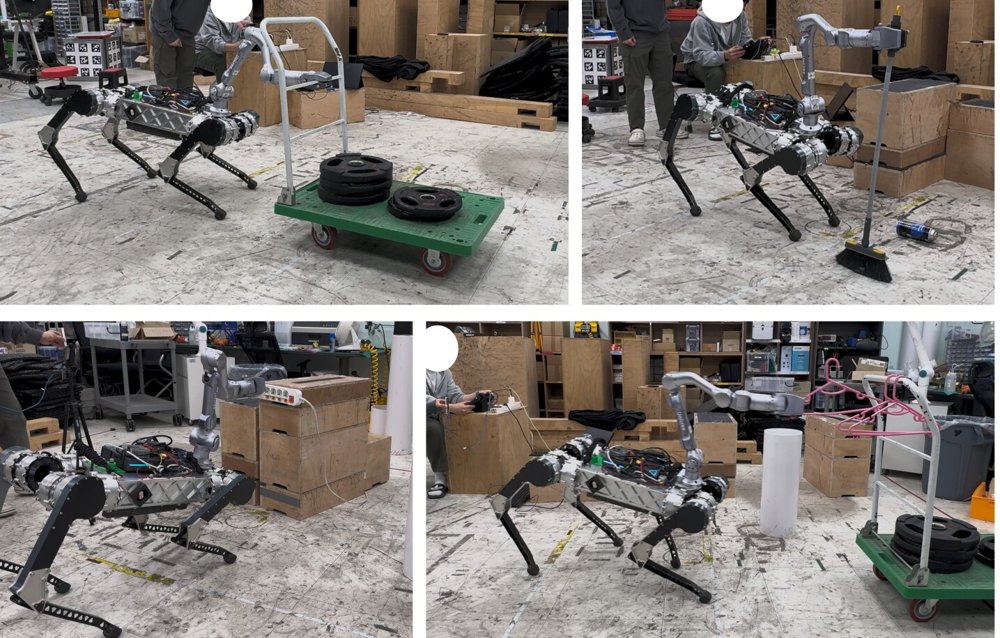
真机 8 类任务、24 episodes 是重要证据,说明该 pipeline 不只是 sim artifact,并且能承受一些真实物体交互。但这些任务仍主要展示 tracking controller 的可用性,而不是 autonomous task completion。评估没有充分说明任务目标是否由外部 scripted trajectory 提供、接触力如何影响控制、失败 episode 是否统计、以及在障碍/碰撞约束下 latent redundancy 是否仍可用。benchmark 支持“高精度移动 pose tracking foundation”,但不足以支持“通用下游机器人任务解决方案”。
Limitation
PAKE 的核心前提是:目标 EE pose 落在 KNF 训练覆盖的 kinematic manifold 内,并且存在某个 partial reference 能被 LLC 动态执行。如果目标超出覆盖,或者可达但动态不可行,KNF 仍可能给出看似合理但执行失败的 reference。LLC 被设定为 feasibility filter,但它的过滤边界文中未充分说明。
方法 heavily rely on data coverage。170M FK samples 让问题看起来很泛化,但这更像大规模离线 kinematic memory。换机器人 morphology、换 arm、加入额外 DoF 或更复杂 torso/leg coupling 时,是否仍能用同样数据规模和 flow capacity 覆盖多解空间,文中未充分说明。
增益来源不清。(-)HLC ablation 说明 latent selection 有用,但没有清晰拆开 KNF 数据规模、latent distribution quality、LLC fine-tuning、curriculum、network size、reward design 的贡献。部分提升可能主要来自 scaling / data,而不是 HLC 学到了特别高级的 coordination strategy。
PAKE 没有真正处理环境约束。它利用的是机器人自身 redundancy,而不是带障碍、物体接触、碰撞避免、任务约束的 constrained redundancy。未来如果要用于复杂 manipulation,KNF latent 里还需要纳入 environment-conditioned feasibility,否则 HLC 只能在无环境几何的 IK manifold 上选解。
长期 planning 不在方法内。HLC 选择 latent reference,不等于形成 task-level planner。论文中的任务更像由外部轨迹驱动的 tracking deployment;如果上层目标需要长时序决策、接触模式切换或失败恢复,PAKE 只是 control substrate。
Takeaway
- 1. 最值得迁移的 insight:对 high-DoF embodied control,不一定要让 RL 直接学全部几何结构;可以先用 cheap simulator/FK 构造可采样的 task-conditioned solution manifold,再让 RL 学 manifold selection。
- 2. Partial embedding 比 full-body embedding 更关键。
- 只嵌入对 manipulation workspace 最有价值、又不会剥夺 base mobility 的 DoF,是 PAKE 的设计精髓。
- 这个思想可迁移到 humanoid manipulation、dual-arm mobile manipulation、dexterous hand-arm coordination:不要把所有 DoF 都塞进一个 reference,而是选择能表达 redundancy 且不会锁死下层控制的 partial coordinates。
一句话总结
PAKE 是一篇把大规模 flow-based partial IK manifold 变成 legged loco-manipulation 高层动作空间的工作,真正贡献在于用结构化 redundancy representation 降低 whole-body RL 搜索难度,而不是提出新的低层控制算法。