精读笔记
Problem Setting
[RASR: Range-Aware Scale Recovery for Metric UAV Navigation](arXiv preprint / 2026-07-14)
这篇论文实际处理的不是一般视觉定位,而是更窄也更工程化的 last-meter UAV command generation:给定一对有序图像,输出控制器可执行的距离和航向。关键矛盾在于:dense pair-geometry foundation model 已经能给出相对结构,但这个结构的 metric scale 在 UAV 场景中没有被可靠校准;而任务评价又不是绝对误差,而是相对距离误差,近距离残差会被显著放大。
以前路线的卡点有两类。retrieval / cross-view localization 能找到位置或方向线索,但不直接输出单对图像的 metric command;DUSt3R/MASt3R 类模型能提供强几何先验,但输出尺度不能直接用于控制。RASR 解决的是这两者之间的接口问题:如何把 frozen geometry 中的相对几何信号转成评价协议下稳定的 metric displacement。
Motivation
作者真正的出发点是:global scale calibration 不够。MASt3R 的 raw metric output 在 PairUAV 上距离几乎未校准;但即使学习一个全局 affine scale,也只能修正平均偏差,不能消除随距离变化的系统残差。由于 PairUAV 的距离项类似 AbsRel,同样的绝对误差在远距离可忍受,在近距离会非常昂贵。
因此缺的不是更强的 correspondence,也不是更大的 navigation policy,而是一个对 range 敏感的 scale recovery 层。作者观察到 frozen geometry descriptor 中已有可恢复的距离排序和尺度 proxy,只是误差形态与评价目标错位。RASR 的 motivation 可以概括为:不要改 backbone,改尺度误差的建模坐标系。
Core Idea
核心思想是把问题重写成 calibrated scale recovery over frozen pair geometry。MASt3R-style backbone 只负责提供可迁移的相对几何证据;真正决定 PairUAV score 的部分被放到一个 range-aware calibration 层里。这个设计的本质区别在于,它不把 metric navigation 当成端到端视觉策略学习,而是当成 foundation geometry 的后验尺度恢复问题。
理论直觉来自 relative loss 的最优估计形式:在 |d_hat-d|/d 这类目标下,最优点估计不是普通均值,而更接近按 1/d 加权后的 median,天然偏向小距离。若预测分布的 spread/skew 随距离变化,全局 affine scale 必然留下 range-dependent residual。RASR 引入的 inductive bias 正是:尺度校准应该以 predicted range proxy 为条件,而不是用一个全局常数解释所有距离段。
Method
方法上最重要的是三件事。
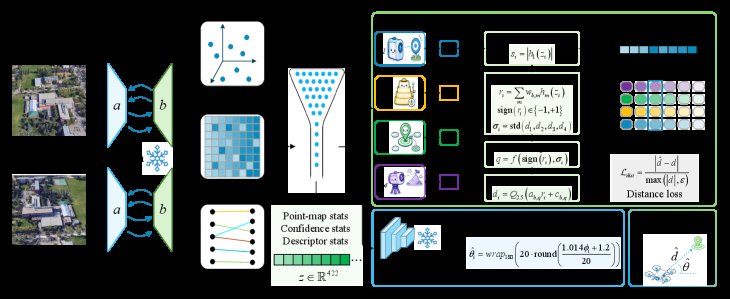
第一,冻结几何模型并压缩成 tabular descriptor。它解决的是视觉证据可迁移性问题:不在 PairUAV 上重新学习 dense geometry,而是把 point map、confidence、descriptor 等统计成固定向量,让后续所有学习集中在 calibration。核心变化是把视觉泛化和尺度拟合解耦。
第二,用多头距离候选和 range bucket mixture 建立 scale proxy。它解决的是单一 head 对不同 range 残差形态表达不足的问题。多头本身不是关键,关键是它们提供互补误差和 disagreement signal,使后续 residual correction 能区分不同置信/距离 regime。
第三,单独设置 protocol-specific calibration module。它解决的是 PairUAV 输出格式和评价目标的问题:按 predicted bucket、候选分歧等 regime 做 affine 修正,再进行 command-grid alignment。这里的核心变化是明确承认一部分优化只服务于 protocol,而不把它包装成通用导航能力。
Key Insight / Why It Works
最可能真正有效的部分是“relative-error objective induces range-dependent calibration”。这比四个 heads、SLSQP、具体 bucket 数量更核心。论文的有效性主要来自 representation alignment:把 MASt3R 的 frozen geometry 表示对齐到 PairUAV 的 metric command space,并进一步把残差对齐到 PairUAV 的 relative score geometry。
global calibration 消除了主尺度错配,这是最大收益来源。range-aware correction 的作用更像在一个已可用的距离 proxy 上做 conditional residual fitting。它不是发现了新的几何推理能力,而是利用 calibration set 中 range-dependent residual 的稳定性。多头 mixture 单独效果不好,说明 ensemble/mixture 不是主要贡献;真正带来收益的是 protocol module 对残差和 score 的拟合。
这里有明显 engineering / benchmark optimization 成分:grid alignment、bucket regimes、affine correction 都强依赖 PairUAV 的 command format 和 metric。不能把最终 score 直接解释为通用 UAV navigation breakthrough。更准确的判断是:这篇证明了 frozen pair geometry 对该 benchmark 有足够强的 latent scale signal,而细粒度收益来自对评价协议的精确校准。
Relation To Prior Work
它最接近的技术谱系不是传统 UAV navigation policy,而是 DUSt3R/MASt3R/VGGT 之后的 geometry foundation model adaptation,以及 monocular metric depth 中的 scale calibration / AbsRel-aware correction。和 cross-view localization 的本质区别是输出不是 retrieval label 或位置匹配,而是单 pair 的 metric command。和 image-goal navigation 的区别是没有学习长期策略或闭环行为,只解决最后一跳的几何命令估计。
看似新的地方,很多是已有思想重组:frozen foundation representation、tabular calibration、bucketed residual fitting、ensemble disagreement、grid snapping 都不是新范式。实质创新在于把这些放到 PairUAV 的 relative command metric 下,并明确区分 transferable scale core 与 protocol calibration。这个区分是论文里最有价值的组织方式,因为它避免把 benchmark-specific trick 混同为泛化几何能力。
Dataset / Evaluation
评估主要基于 UAVM 2026 PairUAV,数据规模很大,hidden test 也足够大;诊断 split 按 scene-disjoint 划分,这比随机 pair split 更能说明不是简单记忆场景 ID。它支持的 claim 是:在该数据分布和 PairUAV 协议下,frozen geometry + calibration 可以产生稳定的 distance/heading command。
但 evaluation 并没有充分验证真实 metric UAV navigation。没有真机闭环、没有控制误差累积、没有动态视角变化下的在线策略,也没有跨 benchmark / 跨相机 / 跨高度分布的外部验证。command-grid alignment 明确是 protocol-specific,因此官方 score 同时衡量几何尺度恢复和对 benchmark interface 的适配。文中证据足以支持 PairUAV score improvement,不足以支持更广义的 deployable UAV navigation claim。
Limitation
最大限制是前提很强:需要一个覆盖充分的 calibration pool,且 hidden test 与 calibration 在采集协议、距离分布、相机模型、场景类型上足够一致。若这些分布变化,range bucket cut points、affine regimes 和 disagreement quantiles 可能都需要重调。所谓泛化主要是 scene-disjoint 内的泛化,不等于跨平台泛化。
第二,增益归因不完全干净。global calibration 已经带来主收益;bucket mixture 单独并不改善,说明 range-aware core 的独立贡献有限。最终提升高度依赖 protocol calibration,可能主要是 engineering / metric fitting。文中未充分说明 heading predictor ϕ 的训练细节和来源,使 heading branch 的可复现性与归因不够清楚。
第三,方法把“metric navigation”问题转移成“offline calibration to command metric”。这对 challenge 有效,但真实控制器通常需要连续命令、不确定性传播、闭环修正和失败检测。文中没有证明 grid-snapped command 在真实控制中合理;甚至作者也承认 deployment 应使用 grid alignment 前的 continuous command。
Takeaway
- 1. frozen pair-geometry foundation model 的价值不只在 dense reconstruction,也可以作为 metric command 的 latent measurement,但必须做显式 scale recovery。
- 2. 在 relative-error 或 AbsRel 类目标下,global scale 往往不是正确归纳偏置;range-aware residual modeling 是可迁移到 monocular depth、relative pose、visual servoing calibration 的 insight。
- 3. 这篇真正推动的是 benchmark-facing calibration architecture:把 transferable representation 和 protocol-specific fitting 拆开。
- 这个拆分比具体四头模型更值得记住。
一句话总结
RASR 是一篇把 MASt3R 类 frozen geometry 通过 range-aware、metric-aware calibration 转成 PairUAV 可执行命令的工程型 scale recovery 工作,真正贡献在于揭示 relative-error 下尺度残差应按距离建模,而非提出新的视觉几何推理范式。